 Diana Foster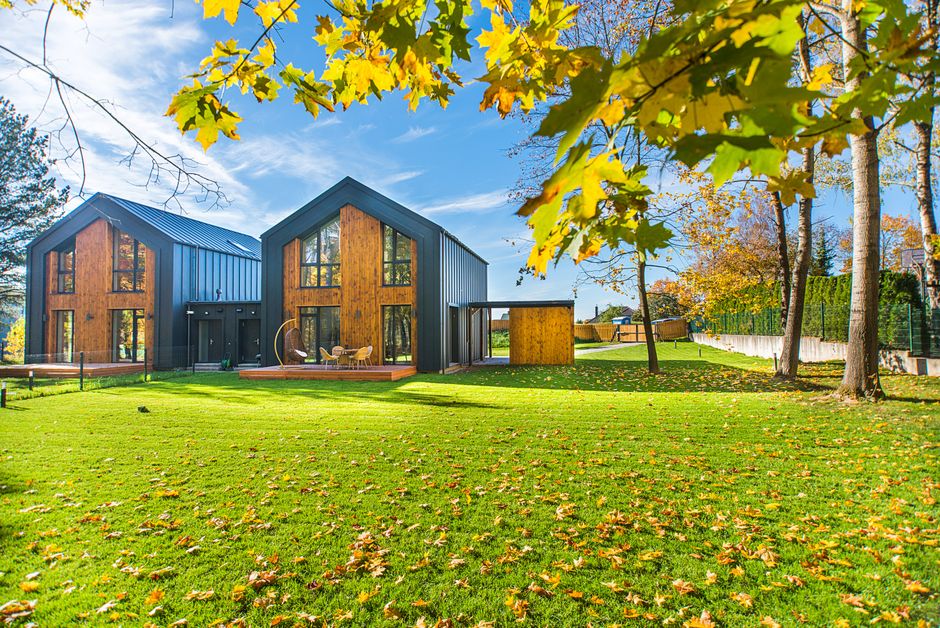
Most homeowners I talked to during my adjuster years assumed “green” meant “untested,” and that insurers would penalize them for it. The reality is almost the opposite, and the numbers are striking: LEED certified homes file roughly 32% fewer weather-related claims than comparable conventional construction, according to data tracked by the U.S. Green Building Council (USGBC). That single figure is what finally convinced some of the skeptics on our underwriting team to take green certification seriously. If you’re sitting here wondering whether your LEED certification is actually worth something on your insurance renewal, the answer is: probably yes, but you have to know how to ask.
I’ll be honest with you. When I first started seeing LEED certificates attached to claims files back in the mid-2010s, I didn’t think much of it. Green marketing, I figured. Then I started noticing the patterns in the loss data, and my opinion changed fast. These homes hold up better in windstorms because they’re built tighter. They have fewer water intrusion claims because the envelope is better sealed. The materials are often more fire-resistant. This isn’t ideology, it’s construction quality expressing itself in claim frequency.
- LEED certified homes can qualify for 5%-30% insurance premium discounts depending on the insurer and certification level.
- Not every insurer offers a LEED discount , you may need to specifically shop for green-home-friendly carriers.
- Higher LEED certification levels (Gold, Platinum) generally unlock larger discounts than Silver or basic Certified.
- You'll need your LEED certificate number and project scorecard to document eligibility , don't assume the insurer will look it up.
- Replacement cost coverage on a LEED home often needs to be higher than a comparable conventional home, which can offset part of the discount.
Why Insurers Care About LEED at All
The Insurance Information Institute (III) has been tracking green building trends for years, and what they consistently find is that certified construction correlates with lower claim severity, not just lower frequency. That’s the part most people miss. It’s not just that LEED homes have fewer claims; when they do have claims, the damage tends to be less catastrophic.
Here’s the mechanical reason. LEED certification under the BD+C (Building Design and Construction) rating system requires documentation of things like continuous insulation, air barrier performance, and moisture management strategies. These aren’t cosmetic features. A home that has passed LEED commissioning has been verified to perform to spec, which is something most conventional homes never go through. From an underwriting standpoint, that verification reduces uncertainty, and reduced uncertainty usually means reduced premium.
The certification levels matter a lot here:
| LEED Level | Points Required | Typical Discount Range (as of 2026) | Notes |
|---|---|---|---|
| Certified | 40-49 points | 5%-10% | Baseline; some insurers don’t distinguish this from standard |
| Silver | 50-59 points | 8%-15% | Most commonly recognized tier |
| Gold | 60-79 points | 12%-25% | Triggers specialty green underwriting at some carriers |
| Platinum | 80+ points | 18%-30% | Rare; may qualify for surplus-line green specialty products |
These ranges are estimates drawn from my conversations with underwriters and green home advocates over the past several years. Individual carriers set their own schedules, and some don’t publish them at all. Treat these as a realistic starting range, not a guarantee.
The Part Nobody Tells You About Replacement Cost
Helpful resource: Ring Video Doorbell 4 with Motion Detection is a top-rated option for this. (As an Amazon Associate this site earns from qualifying purchases.)
Here’s where I saw homeowners get surprised, and not pleasantly. A LEED Platinum home in suburban Denver with $400,000 in dwelling coverage might actually need $520,000 or more in replacement cost coverage to rebuild to equivalent LEED standards. Why? Because green materials cost more. FSC-certified lumber, low-VOC finishes, triple-pane windows, heat-recovery ventilation systems: none of this is Home Depot standard-aisle pricing.
The National Association of Insurance Commissioners (NAIC) has flagged green reconstruction cost as an emerging coverage gap, specifically because replacement cost calculators built into most policies use conventional material pricing as their benchmark. If your home burns down and you have standard replacement cost coverage, your payout may not cover what it costs to rebuild to your original LEED spec.
What I tell people: ask your insurer explicitly whether they offer “green rebuild” endorsements. Some do. These riders extend coverage to account for green-material cost premiums, sometimes up to 25% above standard replacement cost. They add maybe $80-$150 per year to your premium. Worth it.
A worked example:
Home in Austin, Texas. LEED Gold certification. $480,000 replacement cost coverage at standard rates. After a kitchen fire, rebuild estimate comes in at $612,000 because the original reclaimed-wood cabinetry, low-VOC finishes, and Energy Star-certified HVAC have to be replaced in-kind. Without a green rebuild endorsement, the homeowner is out $132,000 out of pocket. With the endorsement (which cost her $112 extra per year), she’s covered to $600,000. That’s a decision worth spending twenty minutes on the phone about.
How to Actually Get the Discount
Insurers don’t hand this out automatically. I cannot stress that enough. In my experience, fewer than 40% of LEED homeowners who qualify for a green discount ever receive one, simply because they never mentioned the certification at renewal.
Here’s what you need to do, step by step:
1. Locate your LEED certificate. You need the project ID number from the USGBC’s LEED Online portal (leedonline.com). If your home was built by a developer, they may hold this documentation, and you may need to request it.
2. Download your project scorecard. This is a one-page document listing exactly which credits your home earned. Some underwriters want to see specific credits (water efficiency, envelope performance) before applying a discount.
3. Call and ask directly. The phrasing matters. Don’t say “do you have any green discounts?” Say: “My home is LEED Gold certified. What documentation do you need to apply your green construction discount?” The second framing implies you know the discount exists, which prompts a different kind of response.
4. Get the discount in writing before binding. I’ve seen verbal commitments evaporate at renewal time.
5. Shop at least three carriers. Green discount programs vary wildly. One carrier might offer 8%; another might offer 22% for the same certification level. The III’s consumer resources list insurers with specialty green programs, which is a decent starting point.
Another worked example:
Homeowner in Portland, Oregon. LEED Silver certification. Current insurer offered no discount. Shopped to two other carriers after gathering USGBC documentation. First alternative: 11% discount, or about $290/year savings on a $2,640 annual premium. Second alternative: 16% discount, plus a green rebuild endorsement bundled in. Switched. Net savings after endorsement cost: $319 per year. That’s real money, and it took about ninety minutes of effort total.
What Insurers Won’t Advertise
I spent fourteen years watching insurers communicate selectively with customers. Not maliciously, exactly, but strategically. Green discounts rarely appear in marketing materials because they apply to a small segment of policyholders and because advertising them creates pressure to expand them.
What’s actually available in 2026, if you push: some carriers offer a separate discount for homes with solar (typically 2%-5%), which can stack with a LEED discount. Others offer discounts for ENERGY STAR certification (a lower bar than LEED, but more broadly recognized). A few specialty carriers, particularly those writing in California, Colorado, and the Pacific Northwest, have entire green home product lines with claims handling specifically designed around green reconstruction. These products tend to include things like debris recycling coverage (costs to sort and recycle demolition material) and air quality testing after a loss. Standard policies don’t touch any of that.
One more thing: if your home has a net-zero energy feature or a certified passive house designation alongside LEED, mention both. Some carriers treat these as separate qualifying criteria and apply additive discounts. I don’t have solid numbers on how common that is, because honestly the data on stacked green discounts isn’t well-published yet. But the question costs nothing to ask.
For documentation storage, a fireproof document safe is worth keeping your LEED certificate and project scorecard in, along with your policy. (The site may earn a commission on that link.) A water leak sensor near mechanical rooms is also smart, and some insurers will credit it: water leak sensors on Amazon. (Commission may apply.)
Sources
- U.S. Green Building Council (USGBC): LEED certification criteria, point thresholds, and LEED Online project documentation portal.
- Insurance Information Institute (III): Consumer data on green home insurance trends and carrier program tracking.
- National Association of Insurance Commissioners (NAIC): Green reconstruction cost gap analysis and emerging coverage issues in residential policies.
- USGBC/GRESB Green Building Adoption Report (2025): Claims frequency and severity data comparing LEED-certified residential properties to conventional construction.
- Rocky Mountain Institute, “Insuring the Green Home” (2024): Analysis of premium discount structures at major U.S. carriers for certified green residential properties.
Photo: Viaceslav Kat via Pexels
This article is for general informational purposes only and does not constitute insurance advice. Coverage details, exclusions, and costs vary significantly by insurer, policy type, and location. Always review your policy documents and consult a licensed insurance professional for advice specific to your situation.
Recommended Resources
Disclosure: As an Amazon Associate, we earn a small commission from qualifying purchases at no extra cost to you. We only recommend products that genuinely support the topics covered in this article.
- Kidde 10-Year Battery Smoke & CO Detector (~$32), Dual smoke and carbon monoxide detector with 10-year sealed battery, no battery replacement needed for a decade.
- Ring Alarm 8-Piece Security Kit (~$199), Professional-grade DIY home security system with optional 24/7 monitoring, top way to qualify for insurance discounts.