 Mark Thompson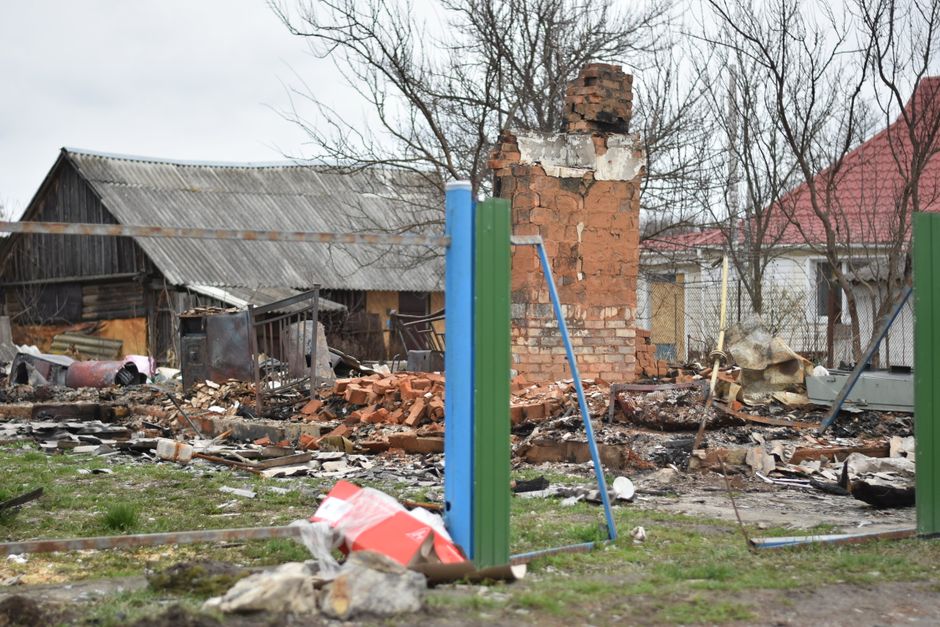
Most homeowners never read their policy closely enough to understand what “total loss” actually means until they’re standing in front of a pile of ash or a flooded foundation. By then, it’s too late to ask the smart questions.
I’ll be honest: even after 14 years of reviewing claims, the first time I personally walked a policyholder through a total loss settlement, I was surprised at how much confusion existed on both sides of the table. The insurer isn’t always trying to cheat you. But the gaps between what you expect and what you actually receive? Those are enormous, and largely preventable.
Total loss is one of those terms that sounds self-explanatory. Your house is gone, insurance pays to rebuild it, life goes on. Except that’s almost never how it works.
- A "total loss" declaration depends on your state's damage threshold, often 50-75% of the home's value.
- Replacement cost vs. actual cash value is the single biggest factor in what you actually collect.
- Most homeowners underinsure by 20-40%, meaning a total loss payout won't cover a full rebuild.
- You can negotiate the insurer's initial settlement figure; most people don't know this is an option.
- Additional Living Expenses (ALE) coverage has strict time and dollar caps that catch people off guard.
What “Total Loss” Actually Means (It’s Not What You Think)
Here’s where most people get the first surprise. A total loss doesn’t necessarily mean your house is completely destroyed. Each state has what’s called a “constructive total loss” or “total loss threshold,” typically set somewhere between 50% and 75% of the home’s insured value. If repairs exceed that percentage, the insurer can declare it a total loss even if three walls are still standing.
What surprised me was how much this threshold varies. California’s threshold sits at 100% (the whole structure must be a total loss). Florida historically used a 50% rule. Texas follows a different calculation entirely. The Insurance Information Institute tracks these state-by-state rules, and they matter enormously because crossing that threshold triggers a completely different claims process, with different paperwork, different timelines, and often a different adjuster team.
The threshold also affects your payout calculation. Once total loss is declared, the insurer stops talking about repair costs and starts talking about the value of the structure itself, which is a fundamentally different number. This shift catches homeowners completely off guard.
Replacement Cost vs. Actual Cash Value: The Gap That Destroys Families
Helpful resource: Blink Mini Indoor Security Camera 2-Pack is a top-rated option for this. (As an Amazon Associate this site earns from qualifying purchases.)
This is the one I saw wreck people financially. Over and over.
If your policy pays Actual Cash Value (ACV) on the dwelling, the insurer applies depreciation to your home’s structure before writing you a check. A roof that cost $28,000 to install but is 15 years old might get valued at $9,000 after depreciation. That’s what ACV pays. If you have Replacement Cost Value (RCV) coverage, you get the full cost to rebuild with comparable materials at today’s prices, which, as of 2026, are significantly higher than even three years ago due to ongoing labor shortages and material cost increases.
Most policies with RCV coverage actually pay in two stages. The insurer cuts you an initial check for ACV, then releases the remaining “recoverable depreciation” after you complete repairs or rebuild. Here’s the insider detail nobody tells you: you typically have 180 days to 2 years to make repairs and claim that recoverable depreciation, depending on the policy. Miss that window and you forfeit the difference. I’ve seen homeowners lose tens of thousands of dollars because they didn’t understand this mechanic.
| Coverage Type | How Depreciation Works | Example Payout (Home with $350k Coverage) | Risk Level |
|---|---|---|---|
| Actual Cash Value (ACV) | Full depreciation applied to structure | $190,000-$230,000 after age/condition deductions | High |
| Replacement Cost Value (RCV) | Depreciation withheld, then paid on completion | $310,000-$350,000 (paid in two stages) | Moderate |
| Extended Replacement Cost | RCV plus buffer, often 25-50% above coverage limit | $350,000-$525,000 | Low |
| Guaranteed Replacement Cost | Full rebuild cost regardless of limit (rare today) | Full rebuild cost | Very Low |
The guaranteed replacement cost policies are nearly extinct in areas with high wildfire or hurricane risk. If yours has it, do not let it lapse.
The Underinsurance Problem
Home Insurance Claims: What To Do & How to Handle Adjusters · Beaux Knows Insurance - Reed Insurance on YouTube
The National Association of Insurance Commissioners (NAIC) has repeatedly flagged underinsurance as one of the most common issues in catastrophic loss events. Industry estimates, which I find plausible based on what I observed in claims, suggest 60-75% of American homes are underinsured, many by 20-40% or more.
Why? Because most people insure based on market value (what they paid for the house) rather than replacement cost (what it would cost to rebuild from the ground up). These numbers have almost nothing in common. A house in a desirable neighborhood might sell for $750,000 while costing $420,000 to rebuild. Flip side: a rural home on cheap land might cost $310,000 to rebuild but only sell for $210,000.
This gap has widened sharply. Construction costs per square foot in many markets are running 30-40% higher today than they were in early 2022. If you haven’t had a formal replacement cost estimate done recently, your coverage limit is probably stale.
A worked example that I saw play out firsthand: A homeowner in suburban Georgia had $280,000 in dwelling coverage on a 2,200-square-foot home. Fire destroyed it completely. The insurer’s estimate to rebuild came in at $398,000. The policy had no extended replacement cost rider. Gap was $118,000. The family had to take out a second mortgage to complete the rebuild. The policy had felt adequate when it was purchased six years earlier. It wasn’t anymore.
What Happens After You File: The Process Nobody Prepares You For
Filing a total loss claim has a specific rhythm. Most people expect one adjuster and one check. The reality is messier.
After you file, the insurer sends an adjuster (sometimes two: one for the structure, one for personal property). They’ll prepare their own estimate, which you are not obligated to accept. Read that again. You can hire a public adjuster or a licensed contractor to prepare a competing estimate. In my experience, the insurer’s first estimate is almost always lower than a good independent estimate, sometimes by 15-25%. The gap is negotiable. Most policyholders don’t know they can push back, and insurers don’t volunteer this information.
The timeline typically runs like this, though it varies significantly by state law and insurer:
- Initial claim filing: Day 1
- Adjuster inspection: Days 3-10
- Coverage determination letter: Days 14-30
- Initial ACV payment issued: Days 30-60
- Dispute period / negotiation: ongoing
- Final settlement: anywhere from 60 days to 18+ months if disputed
During all of this, your Additional Living Expenses (ALE) coverage is running. ALE pays for hotel or rental costs while your home is being rebuilt. The catch: it’s capped both by dollar amount and by time, and the cap is almost always lower than people assume. A family needing 18 months in a rental at $2,800/month needs $50,400 in ALE. Many policies carry ALE limits of $30,000-$40,000. The rest comes out of your pocket.
Scenario: A homeowner in coastal Louisiana after a hurricane → used a public adjuster who found $47,000 in missed items versus the insurer’s initial estimate → final settlement increased by $41,000 after adjuster fees. Public adjusters typically charge 10-15% of the settlement amount. The math usually still favors hiring one on a total loss.
The Home Inventory Question
Here’s where I’ll admit I got this wrong for years, even professionally. I assumed most people had some record of their belongings. Almost nobody does. After a total loss, you’re trying to reconstruct from memory every piece of furniture, every appliance, every item of clothing you owned. Most people underestimate their personal property value by a shocking margin.
A home inventory app like Encircle or the NAIC’s free home inventory tool takes about two hours to set up and can make a five-figure difference in your personal property settlement. Keep the backup somewhere off-site or in the cloud. A document safe like the SentrySafe HD4100 (fire-rated to 1,700°F for 30 minutes, around $75-$90 on Amazon) protects paper documents and drives. (Note: this site may earn a commission on purchases made through links.)
A water leak sensor near your main shutoff is a different kind of protection entirely, but if a slow leak causes enough damage to trigger a total loss declaration, having documented your belongings beforehand changes the settlement conversation completely.
Sources
- Insurance Information Institute (III): State-by-state guidance on total loss thresholds and claim procedures
- National Association of Insurance Commissioners (NAIC): Consumer guides on underinsurance and home inventory resources
- CoreLogic Hazard Risk Report (current as of 2026): Annual data on reconstruction cost trends and insured-vs-replacement-value gaps by region
- United Policyholders (uphelp.org): Nonprofit resource documenting real claim outcomes and consumer advocacy guidance on total loss settlements
- Marshall & Swift/CoreLogic Residential Cost Handbook: Industry-standard reference for replacement cost calculations used by adjusters
Photo: Serhii Bondarchuk via Pexels
This article is for general informational purposes only and does not constitute insurance advice. Coverage details, exclusions, and costs vary significantly by insurer, policy type, and location. Always review your policy documents and consult a licensed insurance professional for advice specific to your situation.
Recommended Resources
Disclosure: As an Amazon Associate, we earn a small commission from qualifying purchases at no extra cost to you. We only recommend products that genuinely support the topics covered in this article.
- Kidde 10-Year Battery Smoke & CO Detector (~$32), Dual smoke and carbon monoxide detector with 10-year sealed battery, no battery replacement needed for a decade.
- Ring Alarm 8-Piece Security Kit (~$199), Professional-grade DIY home security system with optional 24/7 monitoring, top way to qualify for insurance discounts.