 Laura Martinez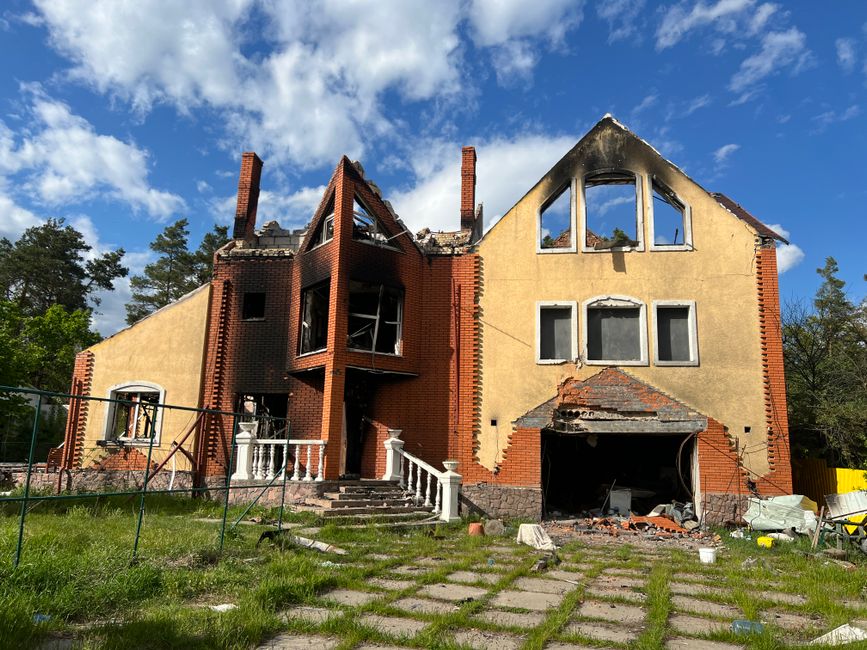
Most homeowners don’t find out what their policy actually covers until they’re standing in a soaked living room at 11pm, phone in hand, trying to remember where they put their declarations page. I’ve been on the other end of that call. Fourteen years of reviewing claims taught me that the single biggest predictor of a denied claim isn’t fraud or negligence. It’s a misunderstanding baked in at the time of purchase, when the agent said “you’re covered” and nobody asked, “covered for what, exactly?”
The named perils vs. open perils question is ground zero for that misunderstanding. It sounds like insurance jargon, so most people tune out when it comes up. Don’t. This one distinction can be the difference between a five-figure check and a politely worded denial letter.
- Named perils covers only damage from causes explicitly listed in your policy; open perils covers everything not excluded.
- HO-1 and HO-2 policies use named perils; HO-3 (the most common) uses open perils on the dwelling, named perils on personal property.
- Open perils shifts the burden of proof to the insurer to show why damage isn't covered; named perils puts that burden on you.
- Upgrading your personal property from named to open perils (HO-5 or an endorsement) typically costs $100–$300/year extra, often worth it.
- Always ask your agent: "What perils are excluded under my policy?" That's the question that actually matters.
What “Named Perils” Really Means in Practice
A named perils policy covers you only if the cause of your damage appears somewhere in a specific list in your policy document. If it’s not on the list, you’re not covered. Full stop.
The standard HO-2 “broad form” policy typically names 16 perils: fire, lightning, windstorm, hail, explosion, riot, aircraft, vehicles, smoke, vandalism, theft, falling objects, weight of ice or snow, accidental discharge of water, sudden cracking of appliances, and volcanic eruption. That might sound like a lot until you’re looking at mold damage from a slow pipe leak (not covered, because slow leaks aren’t “sudden”) or flood damage (never covered, named or not, without a separate NFIP or private flood policy).
The burden of proof in a named perils situation sits entirely with you, the homeowner. You have to demonstrate not just that damage occurred, but that it was caused by a listed peril. I’ve seen adjusters deny claims on HO-2 policies because the homeowner couldn’t prove the exact cause of damage. A fallen tree is easy. Mysterious wall cracking after a wet winter? Much harder.
Open Perils: The Coverage Most People Think They Have
Helpful resource: SentrySafe 1200 Fire-Resistant File Cabinet is a top-rated option for this. (As an Amazon Associate this site earns from qualifying purchases.)
Open perils (sometimes called “all-risk,” though that term oversells it) works the other way around. Your insurer has to prove your damage falls into an exclusion in order to deny the claim. Common exclusions in open-perils policies include flood, earthquake, normal wear and tear, intentional damage, government action, and power failure. The list exists, but the presumption of coverage is yours.
This is why I always tell people: if you have a standard HO-3 policy, your house itself is protected under open perils. Damage to the structure, unless it falls into a specific exclusion, is covered. But here’s what most people don’t realize, and it genuinely surprises them when I explain it: in an HO-3, your personal belongings are still covered under named perils. Your furniture, clothes, electronics, the $2,400 camera you bought last fall. Named. Perils. Only.
So your roof gets the good coverage. Your stuff gets the old coverage. That asymmetry is a deliberate product design, not an accident, and it’s caught a lot of people off guard.
The HO-5 policy, which is less commonly offered and not available in every state or from every carrier, extends open-perils coverage to personal property too. It’s the genuinely complete version. I don’t have precise national penetration numbers for HO-5 availability, but in my experience, agents don’t volunteer it nearly as often as they should.
How the Two Types Compare
Homeowners Insurance Exam: Policy Types Overview · Insurance Exam Queen on YouTube
| Policy Form | Dwelling Coverage | Personal Property Coverage | Burden of Proof | Typical Annual Premium Increase vs. HO-3 |
|---|---|---|---|---|
| HO-1 (basic) | Named perils (10 listed) | Named perils | On homeowner | Much cheaper, rarely sold today |
| HO-2 (broad) | Named perils (16 listed) | Named perils | On homeowner | 10–20% less than HO-3 |
| HO-3 (special, most common) | Open perils | Named perils | Mixed | Baseline |
| HO-5 (comprehensive) | Open perils | Open perils | On insurer | ~15–25% more than HO-3 |
| HO-3 + personal property endorsement | Open perils | Open perils | On insurer | ~$100–$300/year more than base HO-3 |
Premiums vary enormously by location, home age, claims history, and carrier, so treat these as directional comparisons, not quotes. Your state insurance department (you can find yours via the NAIC’s state map) can tell you which policy forms carriers are authorized to offer in your state.
Three Claims That Illustrate the Difference
This is where the rubber meets the road.
Scenario 1: A homeowner in Ohio has an HO-3. A burst pipe in January floods her finished basement, ruining flooring, a sectional sofa, and roughly $6,000 in holiday decorations stored in bins. The burst pipe is a sudden accidental discharge, so the structural damage (subfloor, walls, drywall) is covered under open perils. The sofa? Her policy’s named perils list includes “accidental discharge of water from a plumbing system,” so she’s fine there too. But the decorations in those bins were in a separate storage room she had designated as business storage. Her adjuster flagged it. She got maybe 40% of what she expected after applying sublimits for business property.
Scenario → She didn’t know her HO-3 had a $2,500 sublimit on business property. She got $2,500 on $4,000 in stored inventory. A rider would have cost her about $80/year.
Scenario 2: A homeowner in Arizona has an HO-2. A monsoon storm kicks a 40-pound palm frond through his kitchen window. Windstorm is on the named perils list, so he’s covered for the window and interior damage. Total claim: $3,847, paid out. But a week later he notices the stucco on the north wall has cracked in a pattern consistent with the storm’s pressure differential. His adjuster says there’s no way to prove the storm caused it versus pre-existing settling. Claim denied on that portion. Under an open-perils policy, the burden would have been on the insurer to prove the storm didn’t cause it. That distinction is worth knowing.
Scenario → Named perils, homeowner had to prove causation → $1,200 in stucco repair denied. Under HO-3, likely covered.
Scenario 3: A homeowner upgrades to HO-5 specifically because she runs an indoor photography studio and has expensive equipment at home. Eighteen months later, she knocks a $3,200 lens off a shelf herself. Under her previous HO-3, that’s not covered under any named peril. Accidental breakage by the homeowner isn’t on the list. Under her HO-5 with open perils on personal property, it’s covered because there’s no exclusion for it.
Scenario → Upgrade cost her ~$190/year extra → Single claim recovered $3,200 after her $500 deductible.
The Part Nobody Tells You About Filing
When you file under a named perils policy and the adjuster asks you to describe “exactly how this damage occurred,” that’s not small talk. Your answer is being evaluated against a list. I’ve seen claims adjusters (myself included, early in my career, and I’m not proud of it) note a homeowner’s ambiguous description and kick the claim to the denial pile because the stated cause didn’t map cleanly to a listed peril. Be specific. “The pipe burst suddenly” is better than “there was water damage.” Those aren’t identical statements to an adjuster reviewing an HO-2 claim.
The IBHS home fortification research also points out something relevant here: homes built with better wind-resistance standards generate cleaner claim narratives because the damage patterns are more consistent with known perils. Which sounds abstract until you realize that “the storm did this” is easier to prove when your home has documented fortification. Something to keep in mind if you’re in a storm-prone area and on a named-perils policy.
One practical move I’d recommend for any household, regardless of policy type: build a home inventory and store it somewhere your insurer can access it if your house burns down. Paper copies in the house are useless in a total loss. A fireproof document safe (something like the AmazonBasics Fireproof Document Bag or similar, and yes, this site may earn a commission on that) combined with a cloud backup of photos from an app like Encircle or Sortly is the actual move. For named perils claims especially, proving what you owned before the loss is on you.
Sources
- NAIC (National Association of Insurance Commissioners): Homeowners Insurance Policy Forms overview and state regulatory map.
- IBHS (Insurance Institute for Business & Home Safety): Research on home fortification standards and their relationship to claim outcomes.
- ISO (Insurance Services Office) HO Policy Forms: Standard HO-1 through HO-6 policy form definitions; the source for the named-peril lists used industry-wide.
- NAIC 2026 Homeowners Insurance Report: Current data on policy form prevalence and average premiums by state.
Photo: Yevhen Sukhenko via Pexels
This article is for general informational purposes only and does not constitute insurance advice. Coverage details, exclusions, and costs vary significantly by insurer, policy type, and location. Always review your policy documents and consult a licensed insurance professional for advice specific to your situation.
Recommended Resources
Disclosure: As an Amazon Associate, we earn a small commission from qualifying purchases at no extra cost to you. We only recommend products that genuinely support the topics covered in this article.
- Kidde 10-Year Battery Smoke & CO Detector (~$32), Dual smoke and carbon monoxide detector with 10-year sealed battery, no battery replacement needed for a decade.
- Ring Alarm 8-Piece Security Kit (~$199), Professional-grade DIY home security system with optional 24/7 monitoring, top way to qualify for insurance discounts.