 Diana Foster
Your detached garage just burned down. The fire marshal says it started in the wall where your neighbor’s contractor nicked a wire six months ago. Your main house is fine. You file a claim expecting your homeowners policy to cover the $45,000 rebuild, and your adjuster calls back to tell you the detached structure is only covered up to $15,000 because your “other structures” limit is 10% of your dwelling coverage.
I’ve seen that call happen dozens of times. The homeowner is stunned every single time.
This is the gap nobody warns you about before you buy a policy, and it costs people real money. So let’s get into the actual mechanics of how detached garage coverage works, where it routinely falls short, and what to do about it before you need to file a claim.
How Your Policy Actually Treats a Detached Garage
As of June 2026, Standard homeowners policies (the HO-3 form, which is what most of you have) automatically cover detached structures under something called Coverage B, or “other structures.” This includes your detached garage, a fence, a shed, a pergola, a guest house that doesn’t generate rental income, anything that’s separated from the main dwelling by a clear space or connected only by a fence or utility line.
The default limit is 10% of your dwelling coverage (Coverage A). If your house is insured for $400,000, your other structures limit is $40,000. That’s the total for everything. Your garage, your fence, your tool shed, your detached workshop, all of it competing for the same $40,000 bucket.
What most people don’t realize is that the 10% figure was baked into policy forms decades ago, when detached garages were simple wooden structures with maybe a lawn mower inside. Today people have finished garages with climate control, EV charging infrastructure, built-in cabinetry, and $20,000 worth of tools. The default coverage hasn’t kept pace with how these spaces are actually used and what they actually cost to rebuild.
The coverage that does apply is usually “open perils” on the structure itself (meaning it covers everything except what’s specifically excluded), which is good. But the dollar cap is the real problem.
What’s Inside the Garage Is a Separate Issue
The structure is one thing. Everything inside it is another.
Your personal property coverage (Coverage C on a standard policy) covers your belongings, including items stored in your detached garage. But there are limits within limits here. Many policies cap certain categories of property whether they’re in your house or your garage. Tools are often subject to a sublimit. Power equipment sometimes is too. Collectibles, electronics, sports gear, check your policy’s “special limits of liability” section, which is usually a chart buried a few pages in.
If you have a serious woodworking setup, an auto restoration project, or a home gym in that garage, your standard personal property coverage almost certainly doesn’t fully cover what’s in there. I’ve reviewed claims where a homeowner had $35,000 in tools and equipment in a detached garage and collected less than $12,000 because of sublimits they’d never read.
There’s also a real distinction between tools you use for personal projects and tools you use for business. If you’re running any kind of side business out of that garage, standard homeowners coverage likely excludes business property and business liability. That’s a different policy conversation entirely.
Do a garage inventory right now. The III recommends keeping a home inventory, and there are decent apps for it (Encircle and HomeZada are both solid options). Walk through with your phone, open every cabinet, and document what’s there. Store the result somewhere other than your house (a cloud account or a document safe works). If you don’t know what you have, you can’t argue for fair compensation when something happens.
Helpful resource: Honeywell 1104 Fireproof and Waterproof Safe Box is a top-rated option for this. (As an Amazon Associate this site earns from qualifying purchases.)
Where Coverage Gets Complicated Fast
Homeowners Insurance Exam: Policy Types Overview · Insurance Exam Queen on YouTube
| Coverage Type | What It Covers | Key Limitation |
|---|---|---|
| Coverage B (Other Structures) | Detached garage, shed, fence, pergola, guest house | Default limit is 10% of dwelling coverage; all structures share one pool |
| Coverage C (Personal Property) | Belongings stored in garage | Subject to category sublimits (tools, equipment, collectibles) |
| Coverage A (Dwelling) | Attached garage with shared wall/roof | Full dwelling limit applies |
| Standard HO-3 | Structure damage from open perils | Does not cover earthquake or flood damage |
| Business Use | N/A | Standard policy excludes business property and liability |
A few situations come up constantly that throw people off.
Renting out the garage. If you rent your detached garage to someone, for storage, as a workshop, for parking, Coverage B likely won’t apply to that structure at all. Standard policy language excludes structures “rented to others.” Some insurers will add an endorsement for this; some won’t. You need to tell your agent before you collect a dime, not after something goes wrong.
Using it for a business. Similar problem. If you’re doing auto repairs for customers, running a small contracting operation, or even storing business inventory in there, you’ve probably voided or severely limited your coverage without knowing it. A business owner’s policy (BOP) or commercial property rider is what you’d need.
Earthquake and flood. Neither is covered under a standard HO-3 for the main dwelling or for other structures. This catches people in California and Gulf Coast states especially hard. If a flood takes out your detached garage, your homeowners policy won’t help. That’s a separate NFIP or private flood policy, and even then, detached structures have their own coverage rules under the NFIP. Check with your state’s insurance department (you can find yours through NAIC’s state map) if you’re not sure what’s available in your area.
Attached vs. detached. If your garage is attached to the house by a shared wall or roof, it falls under Coverage A (your dwelling) and benefits from the full dwelling limit. The attached/detached distinction matters a lot. I’ve seen policies incorrectly categorized at binding, and it usually doesn’t get caught until a claim.
How to Actually Fix the Gap
Ask your insurer to increase your Coverage B limit. Most companies will do this for a relatively modest premium increase. If your detached garage alone would cost $80,000 to rebuild at today’s construction costs (and in many markets, that’s not an exaggeration), you need your other structures limit to reflect that, not your insurer’s decade-old formula.
Get a rough rebuild cost estimate for the structure itself. A local contractor can give you a ballpark. Factor in square footage, whether it’s insulated and finished, the electrical setup, and any specialty features. If you have an EV charger installed, that alone adds cost that most people undercount.
Then look at your personal property coverage and special limits. If you have high-value items in the garage, a scheduled personal property endorsement (sometimes called an “inland marine” rider) can cover specific items for their actual appraised value, without sublimits eating you alive.
Add a water leak sensor near any plumbing in the garage. Small investment, potentially catches a slow leak before it becomes a major claim.
Don’t wait for your renewal to look at this. Call your agent this week, ask specifically what your Coverage B limit is, and ask what it would cost to increase it. That conversation takes ten minutes and could save you from the phone call I described at the top of this article.
This article is for general informational purposes only and does not constitute insurance advice. Coverage details, exclusions, and costs vary significantly by insurer, policy type, and location. Always review your policy documents and consult a licensed insurance professional for advice specific to your situation.
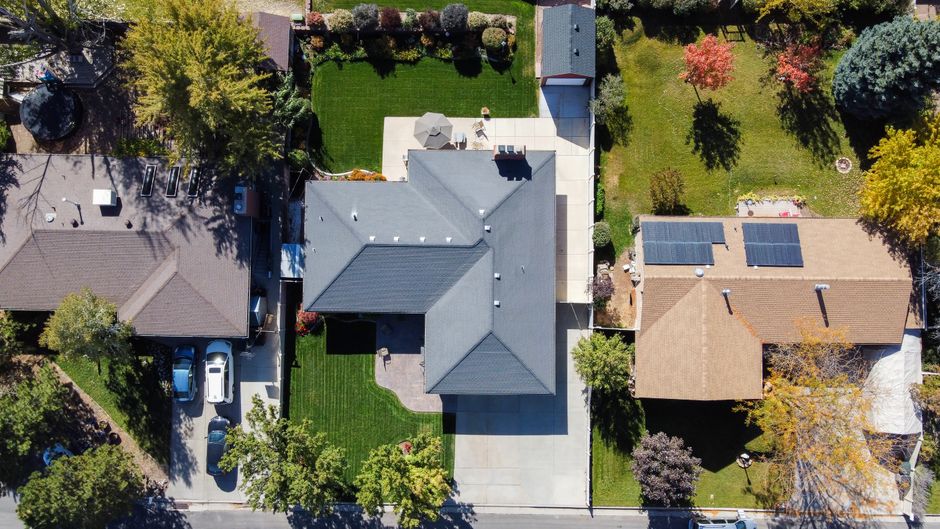
Photo: Jason Dsouza via Pexels
Sources
- The III recommends keeping a home inventory
- Honeywell 1104 Fireproof and Waterproof Safe Box
- NAIC’s state map
- Govee WiFi Water Sensor with App Alerts
- Ring Alarm 8-Piece Security Kit
Disclosure: As an Amazon Associate, we earn a small commission from qualifying purchases at no extra cost to you. We only recommend products that genuinely support the topics covered in this article.
- Kidde 10-Year Battery Smoke & CO Detector (~$32), Dual smoke and carbon monoxide detector with 10-year sealed battery, no battery replacement needed for a decade.
- Ring Alarm 8-Piece Security Kit (~$199), Professional-grade DIY home security system with optional 24/7 monitoring, top way to qualify for insurance discounts.
- Medicare For Dummies (~$22), The definitive consumer guide to Medicare, enrollment windows, Part A/B/C/D, and supplement plans.
- Certified Pet First Aid Kit with Guide Book (~$22), Certified pet first aid kit with step-by-step instructions, an essential item for every pet owner.
Recommended Resources
Disclosure: As an Amazon Associate, we earn a small commission from qualifying purchases at no extra cost to you. We only recommend products that genuinely support the topics covered in this article.
- Kidde 10-Year Battery Smoke & CO Detector (~$32), Dual smoke and carbon monoxide detector with 10-year sealed battery, no battery replacement needed for a decade.
- Ring Alarm 8-Piece Security Kit (~$199), Professional-grade DIY home security system with optional 24/7 monitoring, top way to qualify for insurance discounts.