 Diana Foster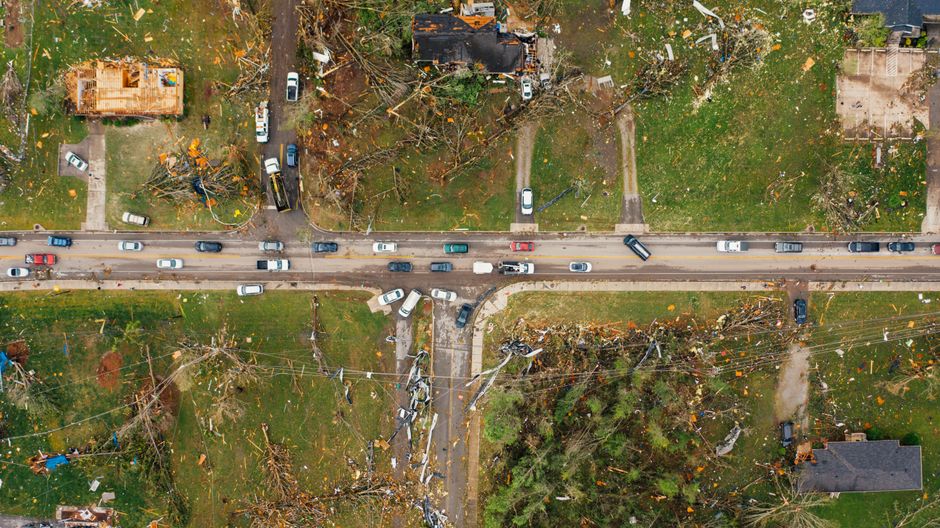
Your neighbor files a claim after a softball-sized hailstorm tears through the suburb, gets a check, and replaces her roof. You file a nearly identical claim two years later and get a fraction of what you expected, because somewhere in your renewal paperwork, your insurer quietly switched you to an actual cash value payout for roofing. Same storm. Same damage. Completely different financial outcome. I’ve watched this exact scenario play out hundreds of times, and right now, in the summer of 2026, the conditions for that kind of gut-punch are better than ever.
Here’s why this matters today: between June 1 and June 17, a single severe convective storm outbreak hammered Chicago, Dallas, Denver, Milwaukee, Washington D.C., and New York City in a 17-day stretch. Gallagher Re estimates the insured losses from that outbreak alone hit the mid-single-digit billions, pushing the 2026 year-to-date total for severe convective storm losses to roughly $22 billion, according to PropertyCasualty360. We’re not even through summer. This isn’t a coastal flood story or a California wildfire story. This is the insurance threat that’s sitting in most Americans’ backyards, and most people have no idea how poorly protected they actually are.
The Numbers Tell a Story the Industry Has Been Slow to Share
The Insurance Information Institute reported in April 2026 that tornadoes, hail, and straight-line winds caused $51 billion in U.S. insured losses in 2025. That’s the third consecutive year those losses topped $50 billion, making severe convective storms the single most expensive natural disaster category in the country. Not hurricanes. Not wildfires. Hail and wind.
What most people don’t realize is how concentrated the damage is. According to the Triple-I April 2026 Issues Brief, hail alone accounts for up to 80% of all severe convective storm claims, and roofs absorb 70% to 90% of total insured residential catastrophic losses. Your roof is the single most financially exposed part of your home, and insurers have spent the last several years quietly changing how they pay for it.
The geographic picture is also shifting in ways that should make homeowners outside traditional “tornado alley” rethink their assumptions. The Cotality 2026 Severe Convective Storm Report identified 43.5 million U.S. properties at moderate or greater hail risk, representing $17.8 trillion in reconstruction cost value. The single most financially exposed metro in the country isn’t Houston or Oklahoma City. It’s Greater Chicago, with $1.0 trillion in property value at risk. That number reflects a broader eastward drift of severe storm activity that meteorologists have been tracking for years.
El Niño Isn’t the Good News People Think It Is
Helpful resource: Blink Mini Indoor Security Camera 2-Pack is a top-rated option for this. (As an Amazon Associate this site earns from qualifying purchases.)
Every few years, when forecasters announce an El Niño pattern, homeowners in the middle of the country breathe a little easier. The assumption is that El Niño suppresses storm activity. NOAA has declared 2026 an El Niño year, and that instinct is understandable. It’s also wrong for the storms that actually damage homes.
Meteorologists cited by Insurify and Monarch Weather in June 2026 are warning that El Niño can actually strengthen the subtropical jet stream, increasing the likelihood of hail and tornado outbreaks across the Gulf Coast and Southeast. The storm systems that produce residential losses don’t follow the same rules as Atlantic hurricanes. If you’ve been telling yourself that El Niño buys you a quiet summer, that reasoning doesn’t hold up for severe convective storms. The June outbreak proved the point in real time.
The Coverage Shift Happening in Your Renewal Packet
#1 Biggest Tip for Water Damage Claims · The Claim Squad Public Adjusters on YouTube
| Coverage Type | Payout Example | Key Difference |
|---|---|---|
| Replacement Cost Value (RCV) | $18,000 for new roof | Full cost to replace damaged roof |
| Actual Cash Value (ACV) | $6,000-$7,000 for 12-year-old roof | Includes depreciation; older roofs pay less |
| Wind-and-Hail Deductible (Flat) | $7,700 average (TX, MA, NJ) | Fixed dollar amount you pay before coverage |
| Wind-and-Hail Deductible (Percentage) | $8,000-$20,000 on $400,000 home | 1%-5% of insured value you pay before coverage |
This is the part that should make you pull out your current policy tonight. Insurers in hail-prone states have been steadily moving away from replacement cost value coverage for roofs, substituting actual cash value payouts that factor in depreciation. A 12-year-old roof that costs $18,000 to replace might yield a check for $6,000 or $7,000 under an actual cash value calculation. The insurer isn’t doing anything illegal. The language was in your renewal. Most people just don’t read it.
The deductible picture is equally sobering. Insurify’s May 2026 hailstorm report found that homeowners in Texas, Massachusetts, and New Jersey now face average wind-and-hail deductibles exceeding $7,700. These aren’t your standard $1,000 or $2,500 all-peril deductibles. Many wind-and-hail deductibles are written as a percentage of your home’s insured value, typically 1% to 5%, which means on a $400,000 home you might be absorbing the first $8,000 to $20,000 of loss before your policy does anything. I’ve seen homeowners discover this for the first time while sitting across from a claims adjuster after a storm. That is not the moment you want to learn it.
A few things worth checking on your current policy: whether your roof is covered at replacement cost or actual cash value, what your specific wind-and-hail deductible is (and whether it’s a flat dollar amount or a percentage), and whether there’s any language about “functional damage” versus “cosmetic damage” exclusions for hail. Some policies now exclude hail damage that doesn’t affect the roof’s weather-tightness, even when the shingles are visibly destroyed. Cosmetic damage exclusions have been spreading quietly across several states.
What Homeowners in Lower-Risk Regions Are Getting Wrong
One of the more stubborn misconceptions I encounter is the idea that this is a Plains states problem. People in the mid-Atlantic, the Great Lakes region, and even parts of the Northeast are underestimating their exposure significantly. The Cotality data makes this concrete: 43.5 million properties at moderate or greater hail risk is not a regional number. It’s a national one.
If you haven’t had a hail claim in 15 years, that history may actually be working against you. Complacency about coverage terms tends to build up during quiet stretches. People stop reading renewals carefully, stop shopping for better terms, and assume the policy that worked in 2018 still works the same way in 2026. Insurers have made significant changes to how they handle roofing claims over that period, and many of those changes were implemented incrementally through renewal endorsements that didn’t require your signature.
The conversation worth having with your agent right now is not “am I covered for hail?” Almost every standard homeowner’s policy includes hail as a named peril. The better questions are how your roof would be valued at the time of a claim, what your actual wind-and-hail deductible number is in dollars, and whether there are any cosmetic or functional damage exclusions buried in the endorsements. If your agent can’t answer those questions clearly from memory, ask to see the policy language directly. That’s a reasonable request and a good agent won’t hesitate.
Getting a professional review of your coverage before a storm hits, not after, is the single most protective thing you can do right now. An independent insurance agent or a licensed public adjuster can help you interpret your policy terms in ways that a quick phone call to your carrier’s customer service line often can’t. The $22 billion in losses already on the books for 2026 is not an abstraction. It’s a signal that the frequency and severity of these events is not returning to what it was a decade ago, and your coverage needs to reflect that reality.
Sources
- June SCS Outbreak Could Be One of 2026’s Costliest Insurance Events (June 22, 2026)
- Triple-I: Severe Convective Storms Generate More Than $50B in Insured Losses for Third Consecutive Year (April 14, 2026)
- Forget Hurricanes. This Is America’s Fastest-Growing Insurance Threat (June 2026)
- Cotality 2026 Severe Convective Storm Risk Report (May 2026)
- The Next Insurance Crisis: Hailstorms Are Quickly and Quietly Driving Up Home Insurance Costs (May 19, 2026)
- Hail a Growing Loss Driver on Rising Tide of Severe Convective Storm Risk, Allianz Says (April 1, 2026)
This article is for general informational purposes only and does not constitute insurance advice. Coverage details, exclusions, and costs vary significantly by insurer, policy type, and location. Always review your policy documents and consult a licensed insurance professional for advice specific to your situation.
Recommended Resources
Disclosure: As an Amazon Associate, we earn a small commission from qualifying purchases at no extra cost to you. We only recommend products that genuinely support the topics covered in this article.
- Kidde 10-Year Battery Smoke & CO Detector (~$32), Dual smoke and carbon monoxide detector with 10-year sealed battery, no battery replacement needed for a decade.
- Ring Alarm 8-Piece Security Kit (~$199), Professional-grade DIY home security system with optional 24/7 monitoring, top way to qualify for insurance discounts.